
Category: Silver Century Insights


Debt and the Older Adult

Should you be worried about carrying debt into your later years? Put your financial savvy to the test.
Technology Quiz
Robots and sensors and Skype, oh my. Test your knowledge of how technology can help us in our later years
Banks Are Becoming Bulwarks Against Scams for Vulnerable Seniors

The first call came just before Thanksgiving last year. She didn’t recognize the phone number, but she answered anyway.
“The person said he was an officer of the Department of Criminal Investigations looking into drug trafficking and money laundering,” the woman recalled. He seemed to know a lot about her: the states where she and her late husband had lived; his name and occupation; and her current address in Washington County, Rhode Island.
On her phone, he showed her a convincing badge and a photo ID with his name (“‘Frank’ something”), plus an article describing the supposed investigation. The woman, a 76-year-old retiree, denied any involvement.
“You can hire a very expensive criminal defense attorney, or you can cooperate with me,” Frank told her.
“Now, when you think about it, it doesn’t make any sense,” the woman acknowledged recently. But persuaded by the badge and ID, she agreed to cooperate. Otherwise, “I thought they were going to come and arrest me.”
Frank called each morning to learn where she was going, what she was doing. His team would be watching, he warned. The woman, feeling “petrified,” started looking around as she drove to garden club meetings. Was somebody following her?
It was all a scam.
Because victims’ sense of shame often leaves them reluctant to report such crimes, the extent of elder financial exploitation is hard to calculate. The Federal Trade Commission reported losses of $2.4 billion in 2024, largely driven by investment and romance scams and impersonations, with total losses much higher.
Americans age 60 and older lose more than $28 billion annually to financial exploitation, AARP estimated in 2023.
As those numbers rise, because the population is aging and predators are growing increasingly resourceful, banks and investment firms are becoming the first line of defense.
Frank’s initial target: her account at Fidelity Investments. He instructed her to shift about $250,000 into her checking account, telling the financial adviser at her local office that she and her family intended to buy real estate.
That scheme fizzled when the adviser said Fidelity could not approve the transaction without more information on the property.
So Frank sent her to her local branch of Washington Trust Company to take $70,000 in cash from a home-equity line of credit. “We don’t give out that much in cash,” the teller said, quietly messaging the branch manager, who had known the woman and her husband for years.
The manager ushered the woman into her office to talk, and the scam stopped there, with a call to the local police. The woman’s assets remained intact, but the experience proved so mortifying that she has not told even her family how close she came to losing much of her life savings. The New York Times is withholding her name to spare her embarrassment.
“I felt so stupid,” she said. “I felt like a fool.”
Financial predators targeting older adults represent “a heightened focus for us now,” said Mary Noons, president and chief operating officer of Washington Trust.
A regional community bank, Washington Trust cranked up its efforts last fall to advise older customers and their families about finances, including the dangers of elder fraud and exploitation. It published and distributed a booklet called “Age With Wisdom” and brought in an expert on dementia to speak with staff members.
And it became one of the 1,500 financial institutions to date to use BankSafe, a free AARP video program that trains front-line employees to spot the red flags indicating possible elder exploitation and to intervene. Everyone at the branch where the 76-year-old banked had taken the training.
“Some older customers visit their bank far more frequently than they see their health care providers,” Noons pointed out.
Until recent years, financial institutions placed “more of an emphasis on the autonomy of the client,” said Pamela Teaster, director of the Virginia Tech Center for Gerontology and an elder abuse researcher. Their approach was, “an adult has the capacity to make poor choices, and we’re going to let them make them,” she added.
But changes in government and industry policies and practices have encouraged greater vigilance. Congress passed the Senior Safe Act in 2018, protecting banks and financial firms from liability if they reported suspected exploitation to authorities.
That year, the Financial Industry Regulatory Authority began requiring member firms to ask for a trusted contact person when investors open or update accounts. (The account holder isn’t obliged to provide one, however.) And since 2022, it has allowed firms to place holds on older investors’ transactions if they suspect exploitation is involved.
About half of states have enacted laws that permit financial institutions to deny suspicious transactions or impose holds for specified periods to allow investigations, said Jilenne Gunther, the director of BankSafe.
“It adds friction,” she explained. “With space and time, the criminal gets worried and might move on. And the potential mark has time to stop and think.”
Teaster’s analysis of data from BankSafe, during a six-month pilot in 82 financial institutions, found that participants were much more likely to report suspected cases and save customers money than a control group was.
Not all of older adults’ losses result from predators, however. They can, on their own, get caught up in investment fads, take on too much debt, or make otherwise unwise decisions, even without criminals pulling the strings or relatives looting their accounts.
Managing finances presents complex cognitive challenges, said Mark Lachs, co-chief of geriatrics and palliative medicine at Weill Cornell Medicine. “It requires a lot of brain,” he said, including: “Memory, remembering that a bill is due. Executive function, the ability to manage your time. Abstraction, hypothesizing about your future.”
He added, “Financial errors are not infrequently the first sign of impending dementia or a neurocognitive disorder.”
A 2024 study by the Federal Reserve Bank of New York, for instance, found an increased probability of delinquent payments and deteriorating credit ratings in the five years before a dementia diagnosis. Those errors can reduce seniors’ access to credit and raise their interest rates on loans at the very point when caregiving expenses are likely to soar.
Lachs has called on fellow doctors to recognize what he calls Age-Associated Financial Vulnerability, a syndrome that can affect even older people with normal cognition, especially if they contend with medical illnesses, sensory deficits, or social isolation.
And he remains skeptical about the financial industry’s claims of heightened attention to its oldest customers. “I still see concerning financial transactions executed that should have received far greater scrutiny,” he said.
Training more front-line staff members and increasing emphasis on establishing trusted contacts for older customers would help, Gunther said, because “once the money leaves the account, it’s near impossible to ever retrieve it.” More states could enact laws allowing financial institutions to deny suspicious transactions or impose holds.
Several related bills with bipartisan support are working their way through Congress. The National Strategy for Combating Scams Act would require the FBI to coordinate efforts to protect seniors. A bill that restores an IRS deduction would at least provide the consolation of excusing scam victims from paying taxes on money they no longer have.
However, new weapons like artificial-intelligence voice cloning — in which the supposed grandson four states away who urgently needs $5,000 in gift cards actually sounds like the victim’s grandson — keep advocates and bankers awake at night.
In the Washington Trust branch where the Rhode Island woman didn’t lose her money, employees just days earlier had stopped a scam similar to the one that had targeted her.
But more recently, nobody spotted any danger signs when an older woman withdrew $9,000 for a kitchen renovation, until it went to a scammer instead of a contractor.
The New Old Age is produced through a partnership with The New York Times.
Theo of Golden

By Allen Levi – Atria, 2025
If you read just one novel from 2025, let it be Theo of Golden. Theo arrives in the small town of Golden as a mysterious, benevolent stranger and is quickly accepted by the locals. In the town café, he lingers over a wall of portraits depicting 92 people he doesn’t know and resolves to purchase and return the artwork to its subjects.
The story follows Theo through moments that appear simple—an unhurried conversation, a small kindness, a friendship that quietly takes hold—but resonate with surprising depth. We know little about him beyond his deep knowledge of the arts, yet through each portrait and its recipient, we see how fully he notices others. Before long, we’re invested in the tender ways people shape one another simply by showing up and being seen.
Reflective and character-driven, this novel offers cozy, small-town charm without veering into sentimentality. Theo of Golden is comforting without being sugary, hopeful without being preachy—a book to linger over and return to when you need reassurance about what matters most: connection, kindness and belonging.
Wheelchair? Hearing Aids? Yes. ‘Disabled’? No Way
That’s a shame because accommodations of all kinds are available for those willing to ask for them. Many are required by law. Journalist Paula Span reports on the situation in this column, posted on KFF Health News on December 11, 2025. It also ran in the New York Times. Funding from the Silver Century Foundation helps KFF Health News produce articles (like this one) on longevity and related health and social issues.
In her house in Ypsilanti, MI, Barbara Meade said, “there are walkers and wheelchairs and oxygen and cannulas all over the place.”
Barbara, 82, has chronic obstructive pulmonary disease, so a portable oxygen tank accompanies her everywhere. Spinal stenosis limits her mobility, necessitating the walkers and wheelchairs and considerable help from her husband, Dennis, who serves as her primary caregiver.
“I know I need hearing aids,” Barbara added. “My hearing is horrible.” She acquired a pair a few years ago but rarely uses them.
Dennis Meade, 86, is more mobile, despite arthritis pain in one knee, but contends with his own hearing problems. Similarly dissatisfied with the hearing aids he once bought, he said, “I just got to the point where I say, ‘Talk louder.’”
But if you ask either of them a question included on a recent University of Michigan survey—“Do you identify as having a disability?”—the Meades answer promptly: No, they don’t.
Disability “means you can’t do things,” Dennis said. “As long as you can work with it and it’s not affecting your life that much, you don’t consider yourself disabled.”
Their daughter Michelle Meade, a rehabilitation psychologist and the director of the Center for Disability Health and Wellness at the university, accompanies her parents to medical appointments and tends to roll her eyes at their reluctance to acknowledge needing support.
Working with other researchers on the recent national poll has shown her how often older adults feel that they are not disabled despite ample evidence to the contrary.
Many people still feel like ‘disability’ is a dirty word.
— Megan Morris, PhD
The survey looked at nearly 3,000 Americans aged 50 and older and found that only a minority—fewer than 18 percent of participants over 65—saw themselves as having a disability.
Yet their responses to the six questions that the Census Bureau’s American Community Survey uses to track disability rates told a different story.
The survey asks whether respondents have difficulty seeing or hearing, limitations in walking or climbing stairs, difficulty concentrating or remembering, trouble dressing or bathing, difficulty working or problems leaving the home.
In the university’s survey, about a third of those aged 65 to 74 reported difficulty with one or more of those functions. Among those over 75, the figure was more than 44 percent.
Moreover, when respondents were asked about several additional health conditions that would require accommodations under the Americans with Disabilities Act, including respiratory problems or speech disorders, the proportion climbed even higher. Half the 65-to-74 group reported disabilities, as did about two-thirds of those over 75.
Yet only a sliver—fewer than one in five—of older adults had ever received an accommodation from their health care providers to which they are legally entitled under the ADA.
Even among the small minority who identified as disabled, only a quarter had asked for an accommodation (though a third received one, whether they asked or not).
“It’s a familiar story,” said Megan Morris, PhD, a rehabilitation researcher at NYU Langone Health and director of the Disability Equity Collaborative. When it comes to the way people describe themselves, “many people still feel like ‘disability’ is a dirty word,” she said.
It’s almost an American value to decline to seek help, even when the law requires that it be available, Michelle Meade added. Faced with a disability, she said, “we’re supposed to toughen up and battle through it.”
In health care settings, it helps a lot if you tell providers you have a disability and ask for help.
That may be particularly true among older Americans whose attitudes formed before the landmark ADA became law in 1990, or even before the 50-year-old Individuals with Disabilities Education Act, which guaranteed access to public education.
“It’s going to be hard for that older generation,” Morris said. “Disability was something that was locked away. Younger folks are more open to seeing disability as being part of a community.”
In the University of Michigan survey, for instance, among people over 65 who had two or more disabilities, about half identified as a person with a disability. In the younger cohort, aged 50 to 64, it was 68 percent.
Why does that matter? “It greatly assists in health care settings if you disclose a disability and know to request an accommodation and support,” said Anjali Forber-Pratt, PhD, the research director at the American Association of Health and Disability.
Such accommodations “can make a stressful situation easier,” she added. They include mammography and X-ray machines that allow patients to remain seated, scales that wheelchair users can roll onto, examination tables that rise and lower so that patients don’t have to step onto a footstool and swivel around.
Health care providers may also offer amplification devices for people with hearing loss, as well as magnifiers and large print materials for the visually impaired. Buildings themselves must be accessible. Practices can send a staff member with a wheelchair to help patients traverse long distances.
Even with a disability parking placard, “you hike in, you wait for the elevator, you hike to the office,” said Emmie Poling, 75, a retired teacher in Menlo Park, CA.
Because of arthritis and spinal stenosis, “I can’t walk with an upright posture for more than a few minutes” without pain, she said. “I basically live on Tylenol.” Yet when she makes an appointment and the scheduler asks if she will need assistance, Poling replies that she won’t.
“My personal voice says, ‘Come on, you can do it,’” she said.
Patients who identify as disabled feel less depressed and anxious than those who don’t, according to research.
Identifying as a person with a disability provides other benefits, advocates say. It can mean avoiding isolation and “being part of a community of people who are good problem-solvers, who figure things out and work in partnership to do things better,” Meade said.
Government programs and private organizations like the National Disability Rights Network, the Americans with Disabilities Act National Network and the National Association of Councils on Developmental Disabilities help connect people with services and supports in their communities.
Several studies have found too that patients who identify as disabled have less depression and anxiety, higher self-esteem and a greater sense of “self-efficacy” than disabled people who don’t.
For years, despite a lifetime of surgeries for congenitally dislocated hips, as well as joint replacements and cancer treatment, Glenna Mills, an artist in Oakland, CA, told herself that she was not disabled.
“I suffered a lot by denying that I couldn’t walk very far,” she recalled. Although walking caused pain in her knees, hips and shoulders, “I didn’t want people to see me as someone who couldn’t keep up,” she added.
But about 10 years ago, “I stopped worrying about that,” said Mills, 82. “I was more willing to say, ‘I can’t do that activity. I can’t walk that far.’” She bought a scooter that allowed her to take walks with her husband and dog and to spend time in museums. “I’m happier now,” she said.
More often, older Americans resist a label that could help improve their care. Even those who do request accommodations may find that enforcement of the ADA remains spotty, in part because patients don’t always report violations.
The Meades, after years of pleading from their children, have made appointments to see an audiologist about new hearing aids.
But Poling intends to struggle on without seeking or accepting assistance. “I know that point will come,” she said. “I’ll attempt to surrender as gracefully as possible, given my personality.”
Until then, she said, “the mental picture that’s acceptable to me is not wanting to look like I’m disabled.”
99 Ways to Die: And How to Avoid Them
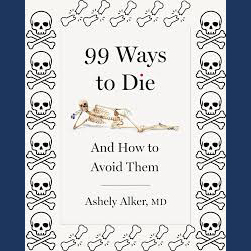
By Ashley Alker, MD – St Martin’s Press, 2026
Maybe you’re someone who, thanks to cartoons, grew up believing that quicksand was a viable threat. 99 Ways to Die is a hilariously grim yet surprisingly comforting ride through the kinds of dangers most of us would rather not think about—until they are forced upon us. Written by emergency medicine doctor Ashley Alker (who jokingly calls herself a “death escapologist”), the book offers 99 real-life ways that people get into trouble, paired with clear, practical advice for staying above it.
The tone is what sets this medical text apart. Alker can shock you and make you laugh in the same breath, without ever losing the point—public health and prevention matter (even if, as she quips, that’s “bad for business” in the ER). The chapters span everything from infections and disease to animals, drugs and poison, crime, sex, the elements, and more, often anchored by stories from the author’s life and work. It’s sometimes funny, sometimes tender, sometimes heartbreaking—and it’s packed with smart guidance that might genuinely keep you, and the people you love, alive.
Joyspan: The Art and Science of Thriving in Life’s Second Half
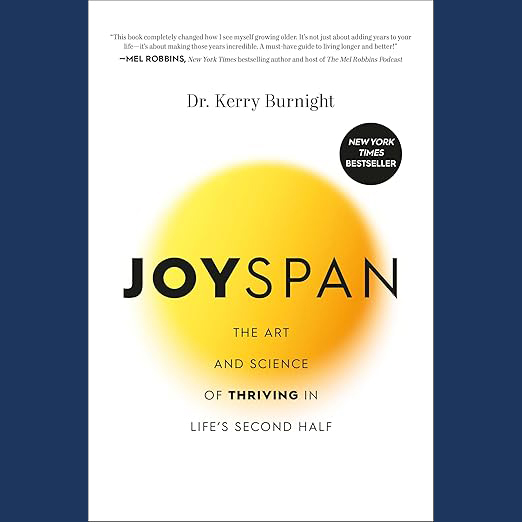
By Kerry Burnight, PhD – Worthy Books, 2025
Aging well isn’t just about adding years to life—it’s about making those years worth living. Joyspan challenges the idea that longevity alone is the goal. Instead, it puts joy, meaning and connection at the forefront, reminding us that emotional well-being isn’t an optional bonus, but the real measure of a life well lived. That shift in focus can change the way we make everyday choices, from how we spend our time to how we nurture relationships.
Rather than sidestepping the difficult parts of aging—loss, caregiving, financial strain, uncertainty—the book leans into them. The author suggests practical ways to stay connected, such as small rituals like a weekly coffee with a friend, joining interest-based groups or even mentoring younger generations. Purpose, too, is reframed—not only in grand achievements but in everyday acts like volunteering, creative expression or cultivating new skills that keep curiosity alive.
Woven throughout are human stories, including the author’s own family experiences, that make these lessons both practical and deeply moving. The book becomes not just a guide but a companion: encouraging readers to embrace flexibility, seek connection and rediscover meaning, no matter the circumstance.
Gaming: A Way to Exercise Older Brains

Video games have always been part of Shawn Etheridge’s life. His interest was first sparked as a young teen, when he toted rolls of quarters to a nearby mall to play arcade games like Pong. As a young adult, as technology evolved, he began playing games like Call of Duty on his personal computer. Later, he even began playing online with his grandchildren, who chortled “Pop Pop” each time they spotted his avatar on the screen, leading Etheridge to adopt “2Pop” as his screen name.
Now, at age 64, Etheridge unwinds after work each night by playing Halo while his wife watches her favorite TV show nearby. He mainly plays for fun, but as he gets older, he also thinks gaming keeps his brain limber.
“The more you play, the more proficient you get, and I’ve got to believe that helps with cognition,” he said.
Etheridge is one of some 57 million Americans over 50 who enjoy gaming, according to recent data from the Entertainment Software Association. Nearly half of Americans in their 60s and 70s play some form of PC, mobile or console video game every week, as do 36 percent of people in their 80s.
The ranks of older gamers are growing too, by more than 12 million, an uptick of 30 percent from 2017 until 2023, according to AARP Research. Whether it’s a lifelong passion or a new endeavor, many older adults are discovering—or rediscovering—gaming as a source of entertainment, a way to stay socially connected and a tool to keep cognitive skills sharp.
Not Just Young Men
Many assume “gamers” are teen or young adult males who play combat games. It is true that fast-paced, real-time games may be more challenging for older adults, as reaction times slow with age. And young “digital natives” can learn the ins and outs of games more quickly and adapt more easily to updates and changes. In fact, older adults are less likely to play video games on consoles such as Nintendo Switch or PlayStation Vita—only about 10 percent of those older than 70 own consoles, according to a 2020 AARP study.
But there are many gaming options that offer a relatively level playing field for players of all ages, including older adults. There are role-playing games and world-building games, where people create virtual environments and characters. There are sports games, like NBA 2K, and simulated racing games, like iRacing.
Some video games involve competing in real time against other players via the internet. But other games are turn-based (i.e. players take actions one after the other, rather than all at once, allowing time to think strategically without the pressure of immediate real-time action.) Many games offer the option to play alone, with the goal of “leveling up” or pursuing an objective rather than competing against others.
Connecting older adults to games they’ll enjoy is a key goal of LevelUpLand, a program of the Franklin County Office on Aging in Columbus, OH. Its centerpiece is a weekly Senior Gaming Day. Participants 60 and up gather at a game arena to try PC games, console-based games, racing simulators and virtual reality headsets, all with the guidance of trained staff. Participants can also enjoy computer-based and online versions of card and board games. The program regularly attracts participants in their 80s and 90s; a 101-year-old is the oldest participant to date.
Participants have formed a community. Many schedule doctors’ appointments around their weekly gaming day. If a regular fails to show up, someone calls to check on him or her.
“Gaming provides a sense of community and a sense of belonging,” said Melita Moore, MD, founder of Levels Unlocked Enterprises, which partners with Franklin County to offer the program.
In role-playing games, an older person’s life experience can be an asset.
Discovering the right games to fit his changing skills and interests has kept Ian Russell, 63, involved in gaming throughout his life. His first foray in gaming was in his 20s, playing Dungeons and Dragons with a group of friends who are still meeting regularly today. His interest shifted to video games, but as he got older, Russell noticed his reaction skills diminishing, making it harder to compete with younger players in combat and racing games.
“Your hand-eye coordination is just not as good or as quick when you’re older,” Russell said. “I find I’m less interested in real-time action and more interested in turn-based role-playing games,” which allow him time to consider each move.
At the same time, Russell notes, the wisdom of older age sometimes comes in handy in role-playing games. As an example, he has played Thief, a game where players navigate a warren of streets in an unfamiliar urban environment, without the benefit of a GPS.
“Navigating around a new town is something that I did in the past,” he said. “If you want to find the center of town, for example, I know that you look for a church spire. So, there’s a lived experience that helps me solve the puzzle.”
However, game developers often don’t design new games with easy access for older adults or newbies in mind. Just a little help from a tech-savvy person can go a long way in getting an older adult started. That’s another key advantage of LevelUpLand. For older adults with mobility challenges, program leaders offer accessibility options, such as an adaptive mouse for those with arthritis. Or they adjust the settings within individual games, such as fine-tuning the speed or changing camera angles to adapt for an older player’s abilities.
LevelUpLand also serves as an educational platform to teach cybersecurity and “healthy digital lifestyles.” Older adults who venture online can be vulnerable, with risks, ranging from bullying and “trash talking” by other competitors, to frauds and scams. LevelUpLand’s online activities take place in secure private chat rooms on Discord, ensuring that scammers don’t have access.
“We’re providing those guardrails so that older adults can be online, play and have fun in a safe environment,” said Chanda Wingo, director of the Office on Aging in Franklin County.
Intergenerational Connections
For many older adults, competition isn’t the goal. Many say gaming helps connect them with younger people.
Vinny Minchillo, 63, plays Pokémon and other “grandchild-appropriate” video games with his 6-year-old grandson. Both play on Nintendo Switch consoles—a regular one for Minchillo and a mini version for the grandson.
Minchillo also enjoys playing more mature games like Assassin’s Creed on PlayStation 5. However, he doesn’t play against other competitors. Instead, he and his wife play collaboratively against the game.
“I don’t keep up with everything that’s going on, which I’d need to do to be competitive,” he said.
Gaming has also built a bond between Russell and his 25-year-old daughter, especially as she’s developed an interest in “vintage” games.
“She has become aware of the video and board games I played 30 years ago and has been buying revamped versions of those games,” he said. “I get a great deal of pleasure from playing them all over again. It’s a massive nostalgia kick.”
Older people have become stars in the video-gaming world on YouTube
Gaming also opened an unexpected career avenue for Russell. As a voice actor, he has played a host of characters in online role-playing video games, such as Vernon Locke in Payday 3 and Abelard Werserian in Warhammer 40,000: Rogue Trader. With his booming, mature voice and British accent, Russell is a natural for “the wise, kindly old uncle” roles, he said with a laugh. His characters have a sizable fan base, most of them young adults, and Russell often converses with them via platforms like Reddit and X.
“I get messages occasionally from young people who say, ‘This game helped me through a difficult time in my life,’” he said.
Russell is far from the only older star in the video-gaming world. A few years ago, Lenovo sponsored the Silver Snipers, a team of over-60 gamers who competed in esports tournaments. There’s Shirley Curry, 89, aka “Gamer Grandma,” who built a following of 900,000 YouTube subscribers who watched video walk-throughs of her plays on The Elder Scrolls V: Skyrim, a role-playing game. And Michelle Statham, aka “TacticalGramma,” a 57-year-old grandmother who loves first-person shooter games. She calls her followers her “grandkids.”
When she started posting, Statham assumed no one would watch, but younger players gravitated toward her friendly, supportive online persona.
“Most people think that older people don’t play games or don’t like games,” she said. “Being an older female has helped me stand out.”
Staying Sharp Cognitively
Research in recent decades has boosted awareness of gaming’s effects on older brains. A number of studies suggest that older people who played video games regularly showed significant improvement in cognitive functions, depressive symptoms, sleep quality and anxiety. One theory posits that video games may simulate novel environments, which are associated with improved memory. In one study, participants ages 60 to 80 played Angry Birds and Super Mario for 30 to 45 minutes per day for four weeks. The video game players showed improved memory compared to a control group that played a card game, Solitaire.
Further research is needed to tease out what types of video games might best support cognitive function. But according to research by the Entertainment Software Association, almost 90 percent of boomer and Silent Generation players cited “using my brain/keeping my mind sharp” as a key reason why they play video games, compared to just one in five Gen Z and millennials.
And while some research suggests that extensive “screen time” may be harmful for young brains, engagement in technology seems to benefit older people’s brains. One recent analysis found that people over 50 who used computers, smartphones, the internet or a mix did better on cognitive tests, with lower rates of cognitive impairment or dementia diagnoses, compared to those who used technology less often or avoided it altogether.
Regardless of the research, many gamers are certain their game play boosts their cognitive function.
“A thousand percent,” said Minchillo. “My PS5 controller has about a dozen different buttons and different combinations of buttons that do different things. To process all the information that’s coming at you very quickly and to respond to it in the appropriate manner—I think it’s great for my brain.”
Medicare Beneficiaries Are Not Luddites

“KFF Health News” coverage of longevity and our aging society is supported in part by The Silver Century Foundation.
The conventional wisdom used to be that seniors would be slow to adopt new digital health technologies. Many seniors were not online. Or many struggled with various cognitive issues. Or they’re not tech savvy. Or they’re suspicious of apps and AI. I wondered how much things had changed when CMS announced the new initiative to “make health tech great again.”
A lot has changed, according to results from the first of KFF’s survey series of the public and seniors about their use of, and appetite for, digital health tech. Possibly COVID forced America’s seniors to get on a steep tech learning curve. Possibly their kids have educated them. Or maybe seniors have simply aged into tech or adapted to new technologies to survive, as they’ve had to do to deal with their cell phone company and streaming service—what choice do they have?
From this survey, we found that the vast majority of seniors are using digital health tools and are interested in making greater use of it to navigate the health care system and manage health care needs. We didn’t find a meaningful difference between “younger” and “older” seniors, although we couldn’t look at the very old with this survey sample. And most Medicare beneficiaries (81%) say it’s important for Medicare to make it easier for them to share information between their providers or make apps more available to manage chronic conditions (63%), which are goals of the CMS initiative.
About 8 in 10 Medicare beneficiaries ages 65 and older used a health care app or website in the last year, and a sizable majority said it made it easier to use the health system. Half of them use multiple apps (55%). And there was no difference in the share of those 65 years or older who used an app or website to help manage their care in the last year (77%) and 30–49-year-olds (76%).
There were, however, sizeable differences between higher and more moderate to lower income seniors in their use of digital health tech—maybe not surprising but important. These differences may reflect sources of care, internet access, and many other factors, but they also mean that there will be real disparities in the use of digital health tools unless concerted efforts are made to level the playing field. As I attend conferences on digital health tech and AI, I hear a lot about how these tools might transform research, or diagnosis, or reduce physician burnout, or create business opportunities. I hear very little discussion of how digital health tech may actually assist patients (credit to the CMS initiative for that, whether you think it will succeed or not), and virtually no discussion of the challenges of reaching lower income populations or of integrating new digital technologies into public programs to improve access and health (except recently to determine eligibility for Medicaid work requirements). Possibly I am attending the wrong conferences.
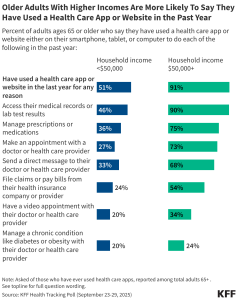
There were also some very big holes in seniors’ use of digital health tools. Relatively modest shares of older Medicare beneficiaries have used an app or website for a video visit in the past year (just 30%). That was surprising. Even fewer have used it to help manage a chronic condition (23%), a major goal of health tech proponents. These are areas to watch and, if you are pushing this stuff, to work on.
And some Medicare beneficiaries do face real barriers to using tech: 17% have cognitive or mental impairments.
To be fair, we didn’t ask Medicare beneficiaries if they still preferred “old school” human contact to apps like MyHealth. These days, you message a care team; they message you back. That’s how you “talk to your doctor.” Many younger adults prefer urgent care centers to what now passes for “meaningful” interaction with your care “team.”
Our survey also found some significant obstacles to more rapid and widespread adoption of digital health tech by seniors, and one is especially significant: AI looms large in plans to expand digital health tech, but only 31% of Medicare beneficiaries ages 65 and older trust AI “a great deal” (8%) or “a fair amount” (23%) to access medical records and provide personalized information and advice. Public trust in AI tools to make appointments or send messages or access medical records is generally low. And both the general public and seniors are worried about the privacy of health information controlled by government, tech companies, or insurance companies (hospitals fare better, but still half of the public overall are worried about the privacy of the health information they manage).
Digital health tech is not the solution to the more basic and most important problems facing the health system. One of my tasks when I was a kid in Boston was to shovel the snow from the driveway so my dad, an internist at what is now BI/Deaconess, could make house calls in the middle of the night. Today, many people can’t find primary care providers at all or get appointments with them. House calls, of course, are long forgotten. Many can’t afford medical care or pay their medical bills, especially people who need a lot of care because they have a chronic illness or a major disease. But apps and other kinds of tech can play a role in making a fragmented and almost hopelessly complex system more navigable for patients. Apparently, as our survey findings suggest, a lot of Medicare beneficiaries—but not all beneficiaries equally—are ready for more digital health tech, and, as I said earlier, have become tech savvy to survive.